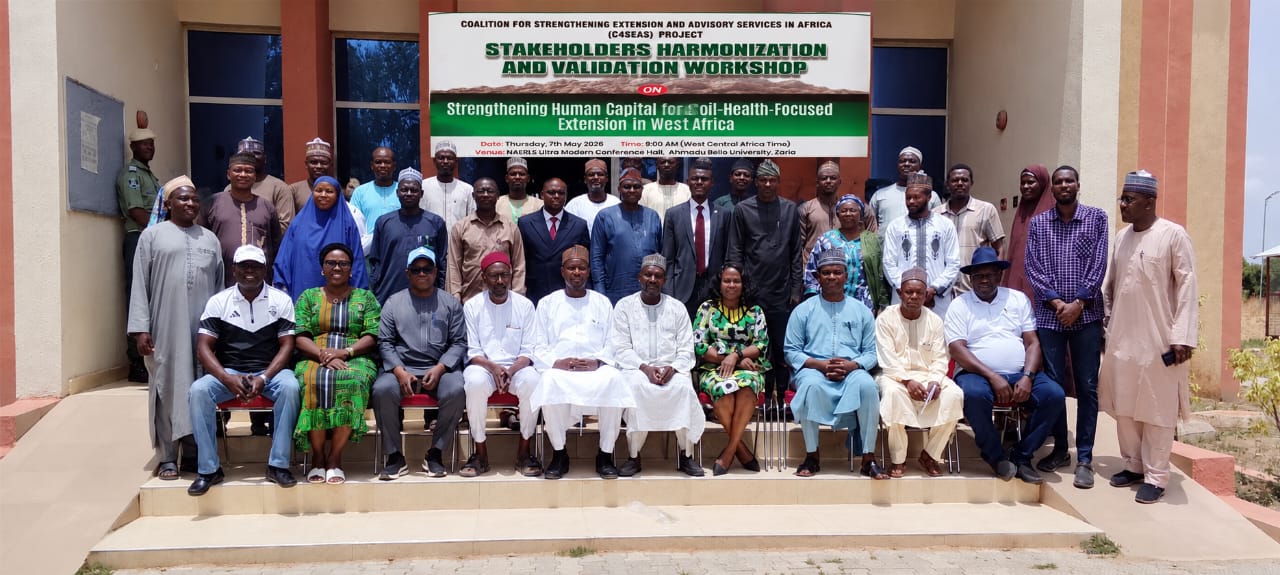

The Coalition for Strengthening Extension and Advisory Services in Africa (C4SEAS), in collaboration with Ahmadu Bello University and the Sasakawa Africa Association, has organised a one-day harmonisation and validation workshop for C4SEAS training modules and soil health advisory tools through a participatory, multi-stakeholder process on May 7, 2026. The workshop brought together key stakeholders in the agricultural sector to review and validate training curricula and digital soil health tools aimed at strengthening agricultural extension and advisory services across Nigeria and Africa.
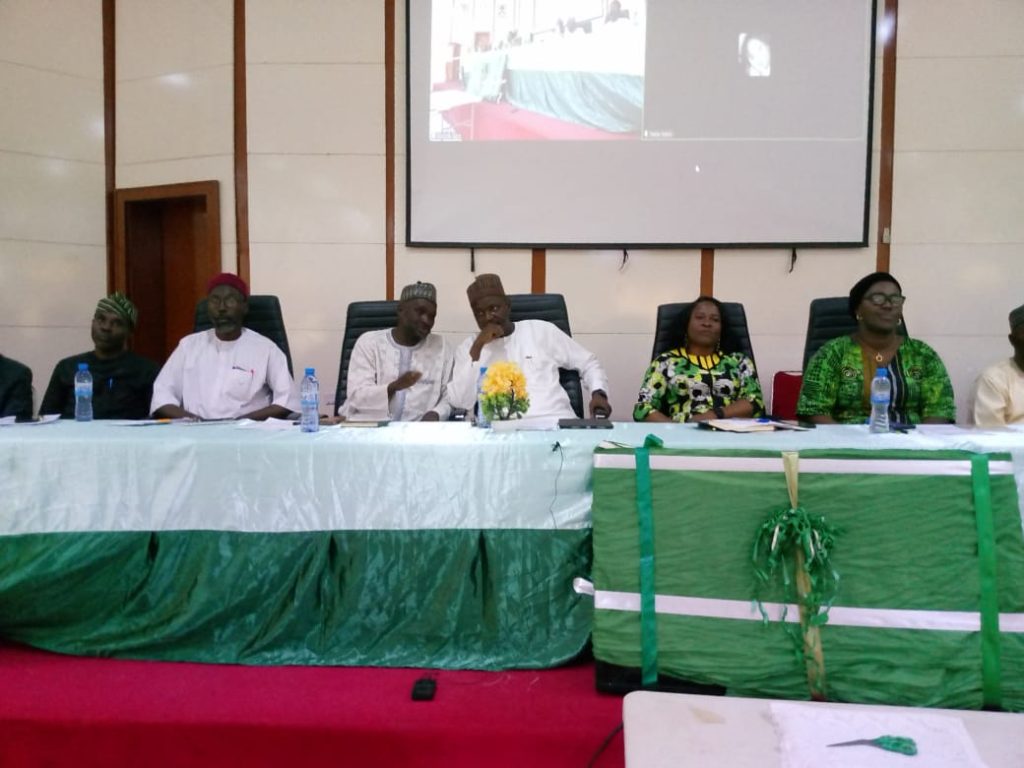
In his opening remarks, the Vice Chancellor of Ahmadu Bello University, Professor Adamu Ahmed, represented by the Deputy Vice Chancellor, Research and Innovation, Professor Sanusi Aliyu Rafindadi, commended the C4SEAS ABU Hub Project team and the Sasakawa Africa Association for convening what he described as a timely and important engagement.
According to him, agriculture remains the backbone of Nigeria’s economy and the primary livelihood source for millions of smallholder farmers, despite persistent challenges such as soil degradation, climate variability and limited access to effective advisory services.
“Addressing these challenges requires not only sound science, but the ability to translate that science into practical, field-level solutions, which is precisely the purpose of this stakeholders’ validation workshop initiative,” he stated.
The Vice Chancellor expressed satisfaction with the technical rigour demonstrated by the ABU project team led by the National Agricultural Extension and Research Liaison Services (NAERLS) in partnership with the Faculty of Agriculture, Institute for Agricultural Research (IAR), and NIFAAS since implementation of the initiative began in October 2025.
In his welcome address, the Director of National Agricultural Extension and Research Liaison Services, Professor Yusuf A. Sani, appreciated participants for attending the C4SEAS Stakeholders Harmonisation and Validation Workshop.
“Your participation reflects a shared commitment to strengthening agricultural systems, enhancing resilience, and advancing sustainable development outcomes for smallholder farmers across Nigeria and beyond,” he said.
Professor Sani noted that the agricultural sector continues to grapple with challenges ranging from climate variability and resource constraints to gaps in extension delivery, data integration and policy coordination.
He explained that initiatives such as C4SEAS were designed to provide innovative, collaborative and evidence-based solutions capable of transforming the agricultural landscape.
“The NAERLS mandate has always centred on bridging the gap between research and practice, and the institute remains committed to ensuring that innovations developed within research institutions effectively reach the farmers who need them most,” he added.
Presenting an overview of the project, the Principal Investigator of C4SEAS, Professor C. K. Daudu, explained that the Coalition for Strengthening Extension and Advisory Services in Africa operates under the Africa Fertiliser and Soil Health Action Plan (AFSH-AP), an initiative aimed at strengthening agricultural extension systems across the continent.
He disclosed that Ahmadu Bello University has been designated as the Anglophone West Africa Regional Training Hub, one of five continental hubs located in Uganda, Zimbabwe, Mali and Ethiopia, to support capacity building in soil health management and sustainable agricultural extension.
Professor Daudu further explained that the pilot initiative seeks to transform Agricultural Extension and Advisory Services (AEAS) through strengthened technical capacity, curriculum development and the production of practical soil health advisory tools for extension professionals and farmers.
According to him, the project is funded with 50,000 US dollars in catalytic resources from the Nippon Foundation through the Sasakawa Africa Association and will run from October 2025 to August 2026.
He said the project’s goal is to build foundational capacity for scalable, soil-health-focused extension services through curriculum reform, practitioner training and evidence-based advisory tools aligned with the AFSH-AP framework.
The initiative is also expected to contribute to the Soil Initiative for Africa (SIA) target of reaching 30 per cent of African farmers with improved soil health solutions by 2032.
Participants at the workshop included representatives from the Kaduna State Ministry of Agriculture, Kano State Agricultural and Rural Development Authority (KNARDA), FDAE, ACCLIMS, IAR ABU Zaria, DAC ABU Zaria, the Faculty of Agriculture, AGRA Kaduna Project Office, NADF, OCP NIFAAS, ISDA, SAA Africa, fertiliser companies and community-based associations.
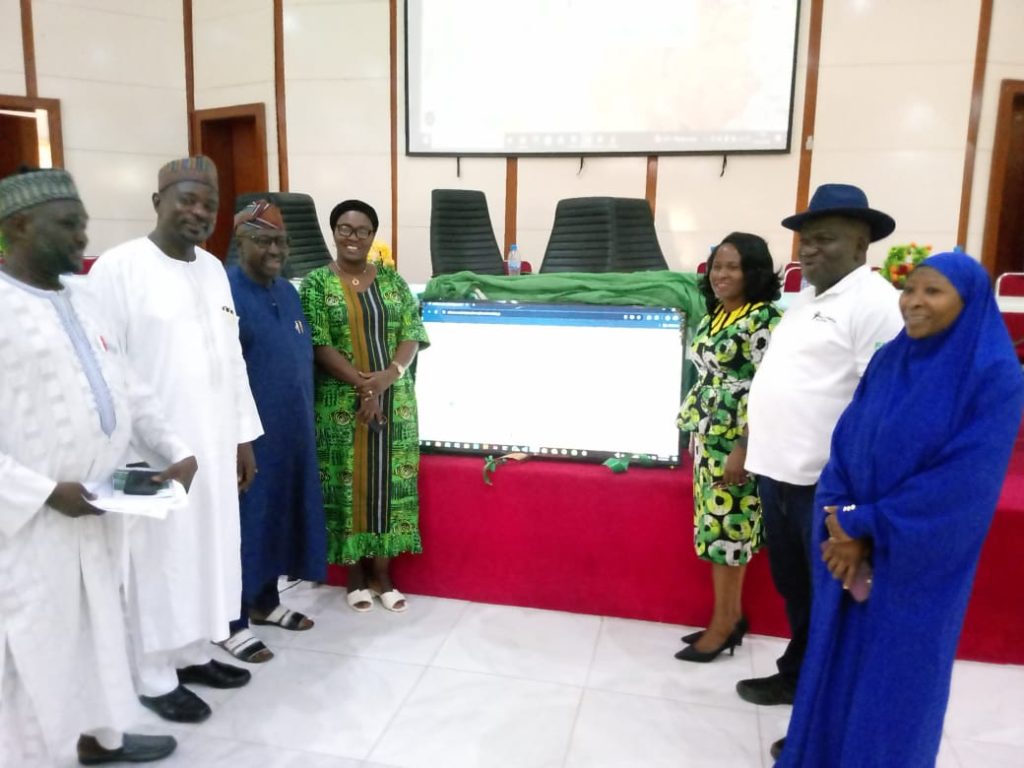
Highlights of the workshop included the official launch of the Pilot Interactive Soil Recommendation Map, a 30-metre resolution digital tool designed to provide real-time soil advisory services for Kaduna and Kano states.
Participants also jointly reviewed and signed off on the “Principles of Soil Health and Extension” curriculum and related advisory tools, including interpretation charts.
The workshop further initiated discussions on data-sharing frameworks and partnership Memoranda of Understanding (MoUs) aimed at integrating the tools into the national extension registry and university elective structures.
Organisers also presented the implementation timeline for the first training cohort scheduled for May 2026.
At the close of the workshop, participants were commended for their active engagement, collaboration and meaningful contributions toward the successful validation process.